
Case study
Rawasy — Multilingual Backend & CMS Platform
Content As Records, Not As Code.
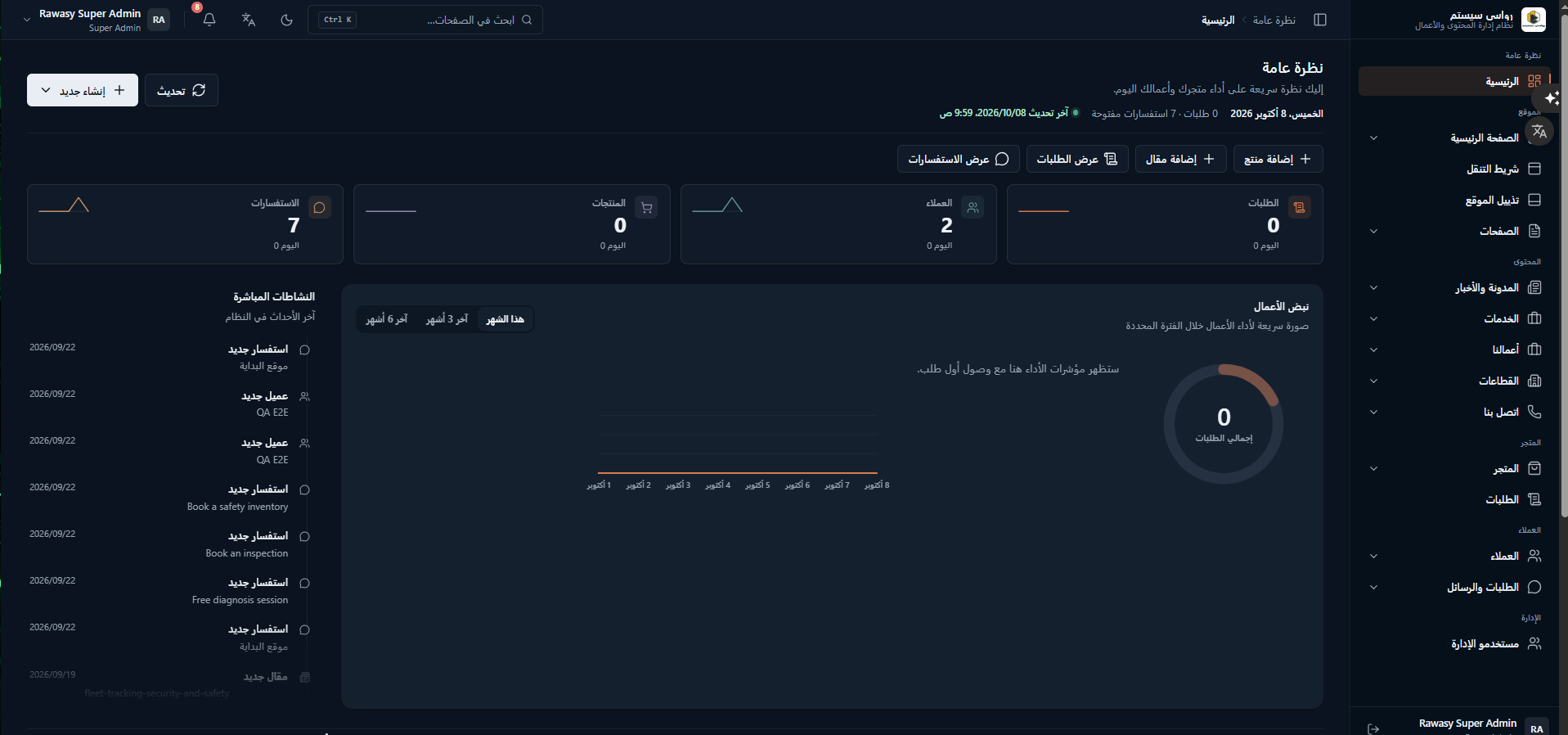
A Laravel CMS and REST API that owns every translatable section of the Rawasy site, its media, its publish state and its SEO text.
- Discipline
- Backend Systems
- Type
- CMS · API · Web platform
- Domain
- Corporate Platform
- Role
- Backend Engineer
- Status
- Live
- Timeline
- Production System
01Project overview
What this system is
The platform models the public site as data. Services, sectors, solutions and articles are records with translations, media and a draft/published lifecycle; the frontend reads only what has been published, through REST endpoints that validate every request. Administration sits behind authentication and role-based permissions, and the whole thing runs on a dedicated PHP-FPM pool behind Nginx and Cloudflare, released deliberately rather than edited on the server.
02The challenge
The problem it had to solve
A multilingual corporate site whose content lives in code needs a developer and a deploy for every wording change, every new service, every article — and offers no place to collect the requests the site generates.
03Solution & features
What was built
A Laravel platform where each piece of site content is a translatable record with its own media, publish state and SEO fields, administered behind authentication and permissions, and served to the frontend through versioned public REST endpoints — so the site changes as data, not as code.
Core features
Centralised multilingual CMS
Services and business sectors management
Solutions catalogue
Blog and article publishing
Draft and published state controls
Media management
SEO content management
Public REST APIs for the frontend
Authentication and role-based permissions
API request validation
Contact and business request handling
Dedicated PHP-FPM runtime
Controlled production deployment
04Architecture & integrations
How the system fits together
Four layers, one contract. MySQL holds the translatable content and the requests the site collects; Eloquent models and policies express what each role may do with them; the REST layer publishes the approved subset to the frontend; and Nginx with a dedicated PHP-FPM pool, behind Cloudflare, serves it.
Layers
01
Data Layer
MySQL schema for translatable content, media references, publish state, and the contact and business requests the site generates.
02
Domain Layer
Eloquent models, relationships and authorisation rules covering services, sectors, solutions, articles and media.
03
API Layer
Public REST endpoints serving published content to the frontend, with Sanctum-authenticated administration and validation on every request.
04
Runtime
Nginx with a dedicated PHP-FPM pool on a Hostinger VPS, fronted by Cloudflare, with controlled deployment.
05Technologies & role
The stack, and the role in it
Role on the projectBackend Engineer
- Back end
- Laravel 12
- PHP 8.3
- Eloquent ORM
- Laravel Sanctum
- Integrations
- REST API
- MySQL
- Infrastructure
- Nginx
- PHP-FPM
- Hostinger VPS
- Cloudflare
One platform, two halves
The site this platform serves
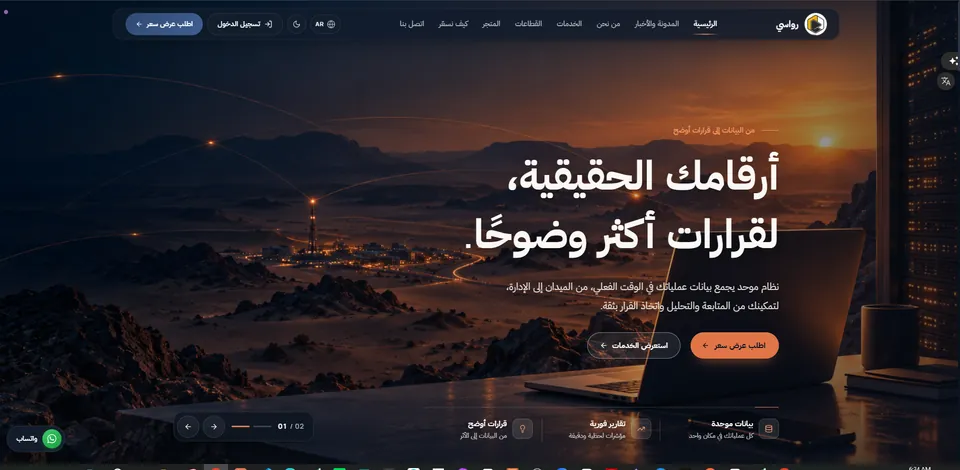
Every service, sector, solution and article administered here is rendered by the Rawasy multilingual frontend, which ships as its own case study.
The live link opens the public site. The administrative platform at systemrawasy.murshied.com requires a sign-in and is not publicly reachable.
Related work
More systems like this
Morshed Platform Management System
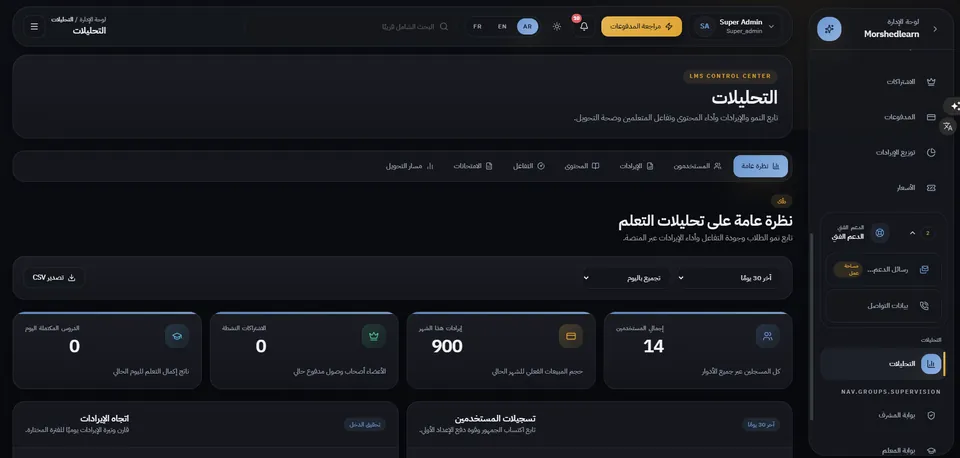
A centralized management system that operates the whole Morshed educational platform — users, curriculum, lessons, courses, exams, subscriptions, payments, permissions, and the content the public site renders.
Shakirin Mills Gold Refining Management System
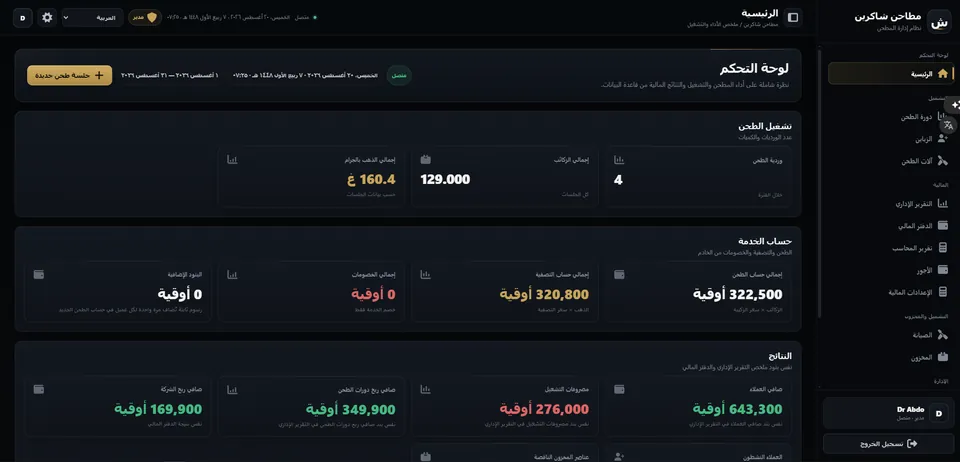
A complete operational and financial system for gold grinding and refining businesses, unifying grinding operations, customers, inventory, payroll, expenses, collections, accounting, and reporting in one platform.
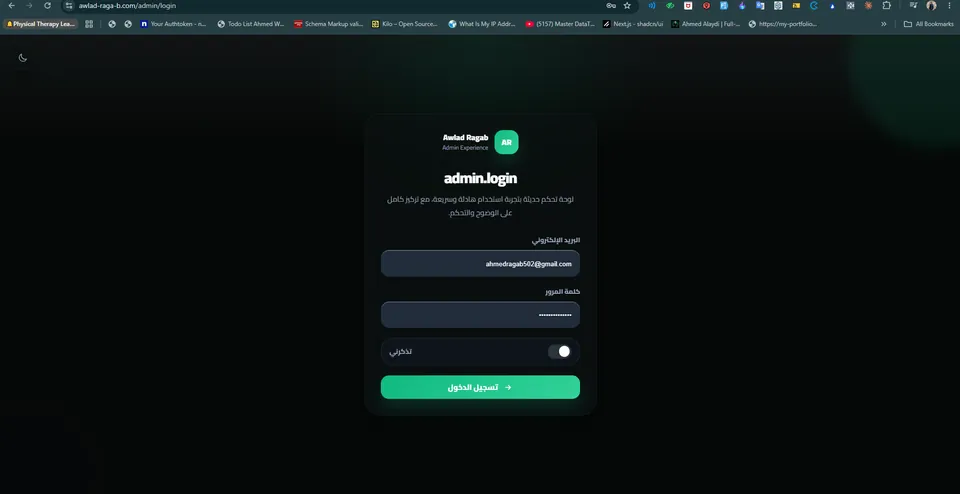
Awlad Ragab Wholesale System
The Laravel platform that runs Awlad Ragab's wholesale operation: products and categories, customer and representative accounts, orders, promotions, loyalty points, permissions and reporting, served to every client through one REST API.
Building something similar?
Describe what you need — the users, the scope, the systems it has to connect to — and I’ll reply with questions or a next step.